
People often ask me, “What exactly is a lustre?” It’s a fair question, because they’re not as well known as chandeliers, but they’re every bit as beautiful.
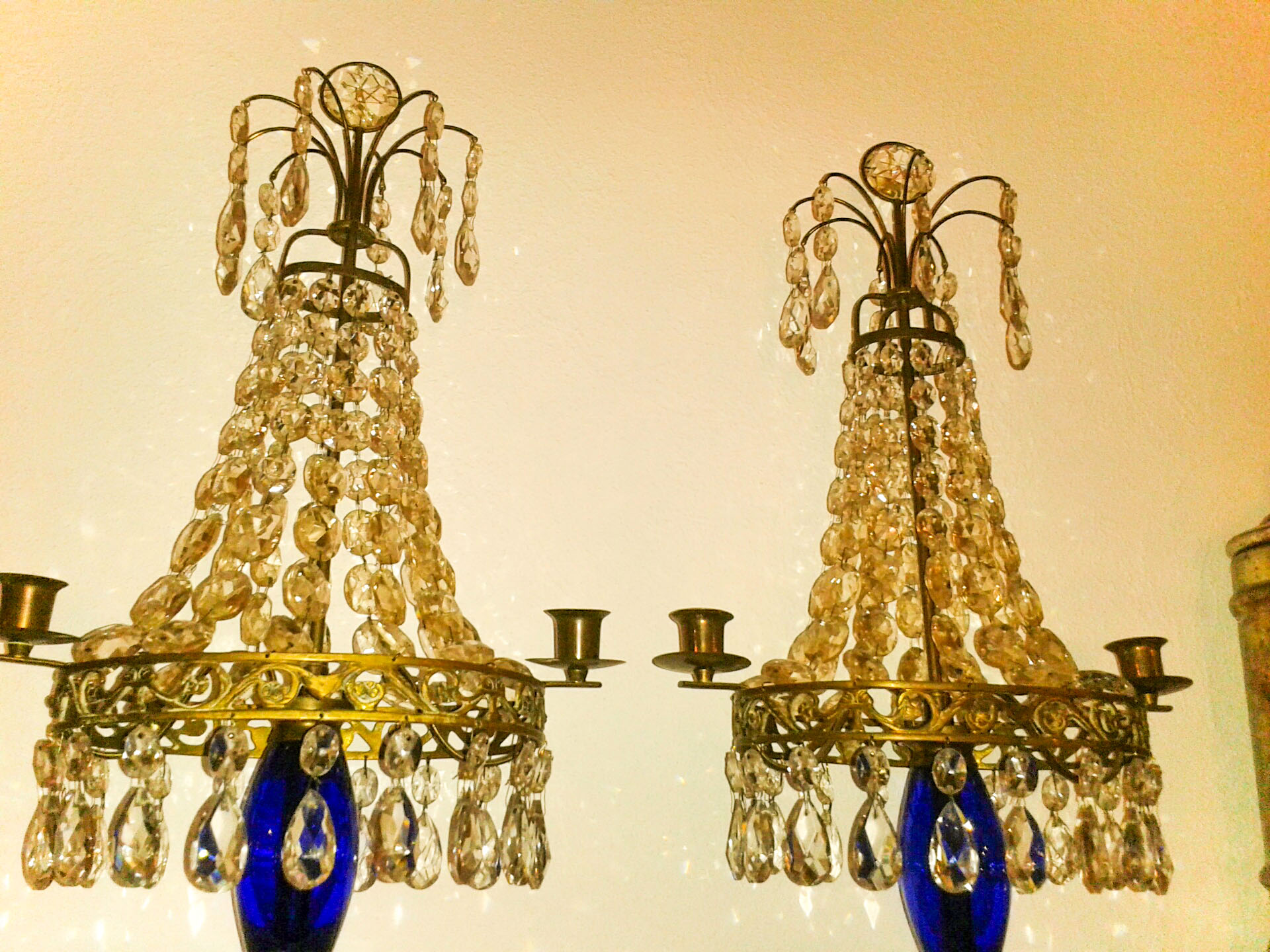
A lustre is a decorative candlestick, usually made from beautifully cut glass and dressed with hanging crystal drops. Originally designed to sit on mantelpieces, sideboards and dining tables, they were created to make the most of candlelight. As the flames flickered, the crystal drops reflected and scattered the light around the room, adding a warmth and sparkle that transformed an evening long before electricity came along.
Lustres became particularly popular during the Georgian and Victorian periods, when glassmakers were producing some of the finest decorative glass in Europe. From elegant Regency designs to richly coloured Victorian examples, each period developed its own distinctive style, and today they’re admired just as much for their craftsmanship as their practical purpose.
One of the things I enjoy most about lustres is their versatility. You don’t need a grand house or a sweeping staircase to enjoy them. A well-placed pair on a mantelpiece or console table can bring just as much character to a room as a much larger chandelier.
I’ve always thought lustres have a quiet confidence about them. They don’t demand attention, but before long you’ll notice people wandering over for a closer look. It’s usually the crystal drops that catch the eye first, followed by the question, “What are these?”
Whether you’re looking for a matching pair to complete a room or a single piece with plenty of character, lustres are a wonderful way to introduce a little history, craftsmanship and elegance into your home. And if you’re not quite sure what you’re looking for, don’t worry—that’s where I come in!